
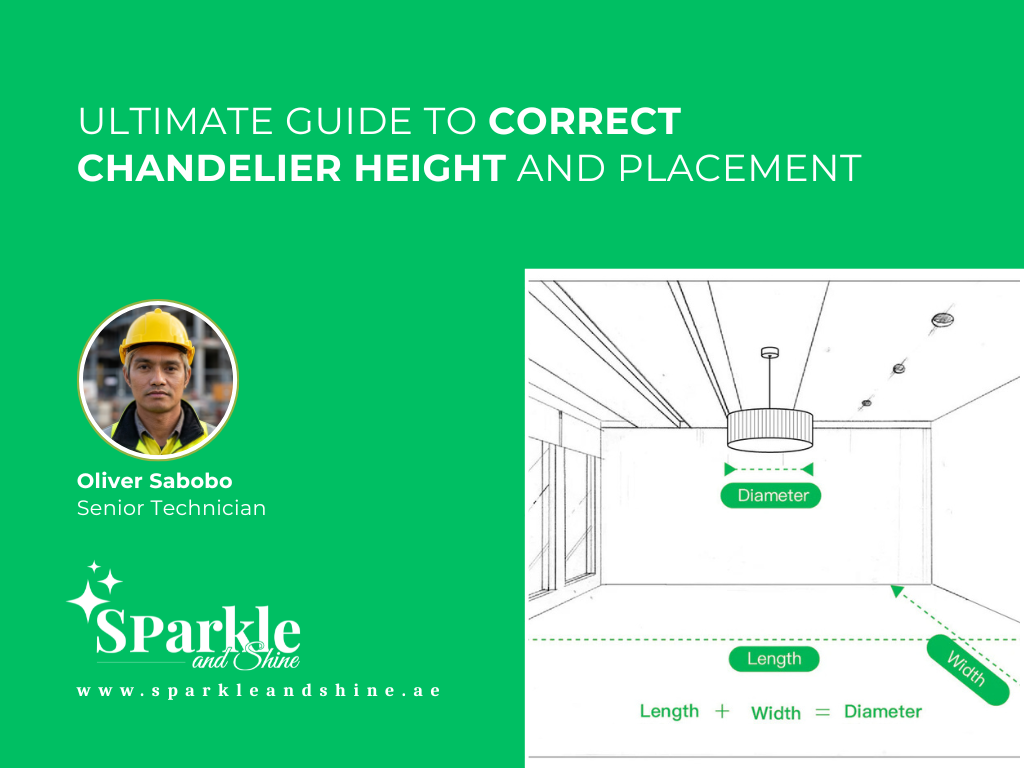
Key Professional Takeaways
- Form meets function: Correct height ensures both elegance and illumination, avoiding glare and awkward sightlines.
- Proportional thinking matters: Scale your chandelier to the room dimensions and furniture underneath, not just the ceiling height.
- Safety and harmony: Proper clearance maintains flow and prevents accidental bumps or heat concentration.
- Each room has its own rules: Dining rooms, foyers, and staircases each follow specific placement formulas for optimal beauty and balance.
Introduction
A chandelier does more than light up a room, it sets the tone for how the space feels. Too low, and it intrudes on the room’s comfort zone. Too high, and its sparkle feels distant and disconnected. In my nine years working with chandeliers across villas and show homes in the UAE, I’ve seen both the subtle magic and silent mistakes that placement can bring.
As one old installer’s proverb reminds us, “A chandelier doesn’t just hang in a room it defines it.” Let’s explore how to hang yours like a pro.
The Golden Rules of Chandelier Placement
There’s a balance between practical safety and aesthetic grace. Here are time-tested placement standards used by seasoned lighting consultants worldwide.
1. Over a Dining Table
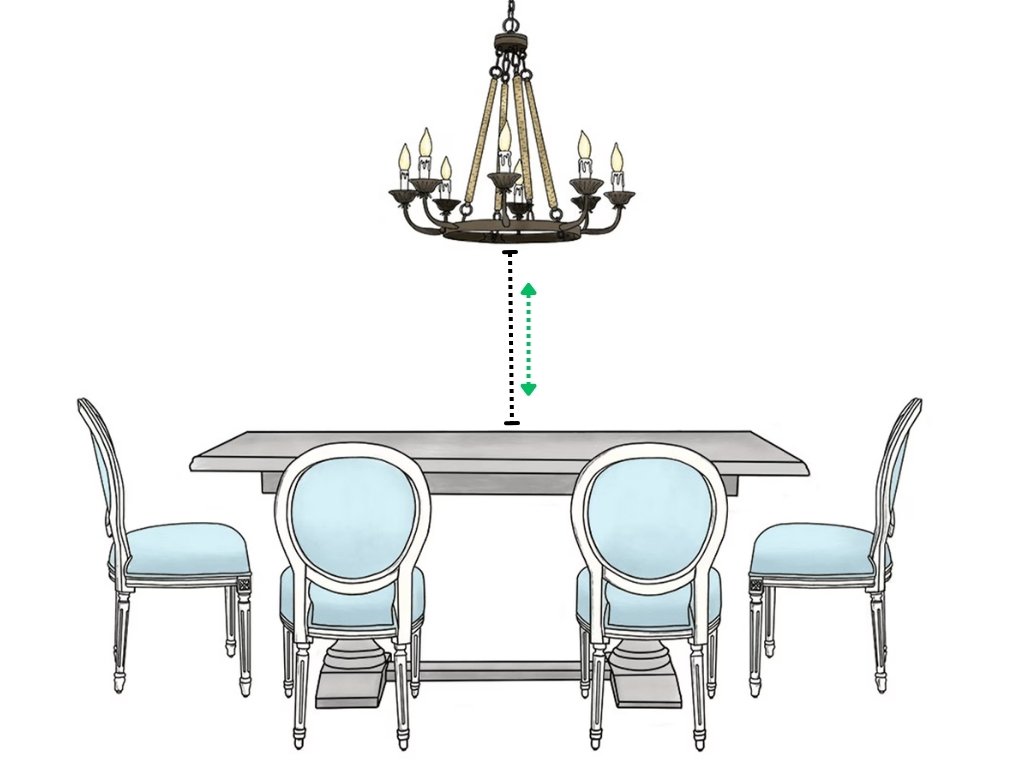
- Height above the tabletop: Hang the chandelier 75–90 cm (30–36 inches) above the table surface.
- Width proportion: The fixture diameter should be 1/2 to 2/3 the width of the table.
- Centering rule: Always align the chandelier with the table, not the ceiling center especially if the dining area is offset.
Designer Tip: “The lower it hangs, the more intimate the light but elegance lies in not blocking conversation.”
2. In Open Rooms (Living Areas)
- Maintain at least 210 cm (7 ft) of clearance from the floor in spaces where people walk.
- For high ceilings (3.5 meters or more), look for tiered designs to fill the vertical volume without overwhelming the room.
- If the chandelier sits above a coffee table, the base can drop to 180–200 cm (6.0–6.5 ft) from the floor.
3. Foyer or Entrance Halls
- The bottom of the chandelier should not be lower than 240 cm (8 ft) from the floor.
- For double-height ceilings, use this formula:
- Chandelier height = Ceiling height (in feet) × 2.5–3 inches.
- Example: A 20-ft foyer calls for a chandelier about 50–60 inches tall.
- Center the fixture in line with the main entrance for symmetry and immediate visual impact.
4. Staircases
- Keep 250–270 cm of clearance above each landing.
- When visible from multiple floors, position the chandelier so both upper and lower views feel balanced around the eye line.
- In spiral stairs, offset slightly toward the inner curve for graceful sightlines.
5. Bedrooms
- Over the bed, maintain a minimum clearance of 210 cm from the floor.
- Match fixture width to about half the bed width for visual harmony.
- Use dimmable circuits ambience is everything here.
Room-by-Room Master Guide
Dining Room
- Choose a shape that follows the table’s silhouette: round chandeliers for round tables, linear designs for rectangles.
- Always install a dimmer switch; it transforms dining from family time to fine dining in seconds.
- Mirror-backed walls? Reduce lumens slightly to avoid harsh glare from crystal reflections.
Living Room
- Anchor the chandelier over the main seating cluster, not the geometric center of the room.
- In rooms with ceiling fans or recessed lighting, maintain balanced spacing to avoid overshadowing.
- Large living rooms often need grouped chandeliers or complementary pendants for cohesive layering.
Bedroom
- Place mini chandeliers or pendant drops on either side of the bed for balance.
- Avoid central positioning if it coincides directly over where your head rests both visually and psychologically unsettling.
Hallway / Foyer
- Always consider first impressions the chandelier should be visible from the main entrance but not overwhelming.
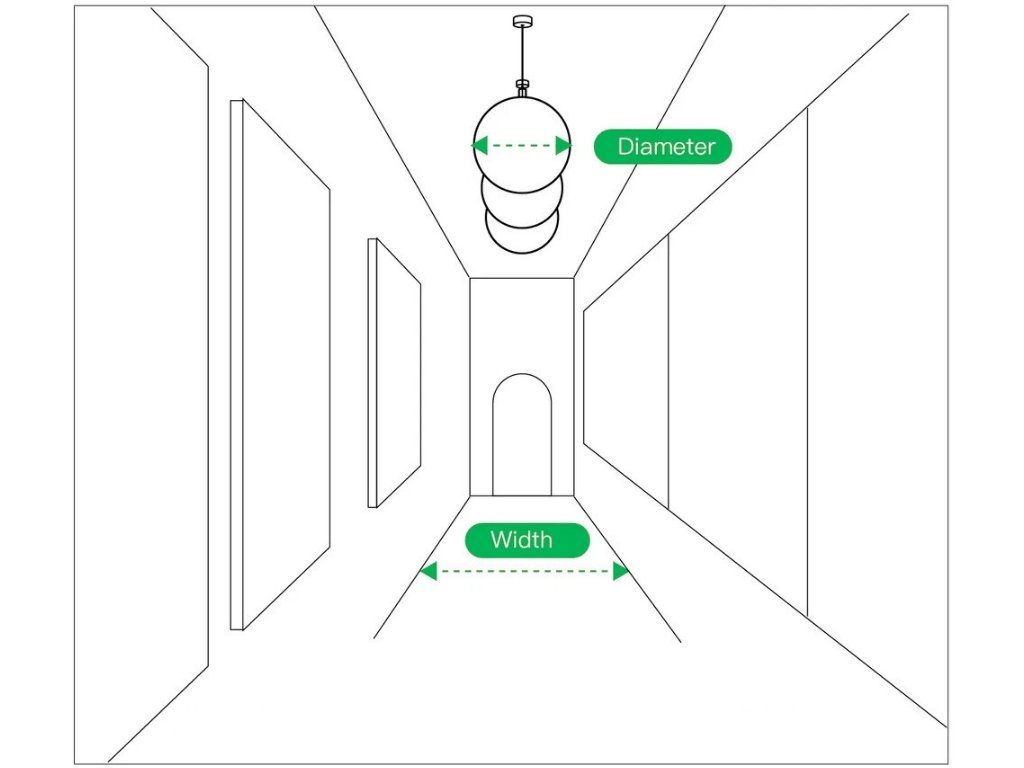
- For narrow halls, long crystal cascades or slenders tiers add drama without intrusion.
Staircase
- Use LED candle bulbs or low-heat tech for safety near the ceiling.
- Add a lift mechanism for servicing tall installations vital in houses over 6 meters high.
Pro Insights & Common Pitfalls
Common Mistakes I Often See
- Ignoring furniture layout: Hanging by ceiling center instead of above the dining or coffee table.
- Using undersized fixtures: In tall or large rooms, a small chandelier looks lost.
- Skipping ceiling reinforcement: Heavy chandeliers need structural support, not just a hook in gypsum.
- Overlooking dimming control: Proper lighting levels enhance crystals’ shimmer and prevent harsh glare.
Expert Secrets
- Always measure eye-level sightlines. The lowest tier of crystals should glow, not glare into seating areas.
- For mirrored surfaces (marble floors or glossy ceilings), raise the fixture slightly higher to avoid overreflection.
- In open-concept villas, coordinate fixture height consistency across adjacent spaces for aesthetic flow.
Industry Note: The Lighting Research Center suggests keeping a minimum vertical clearance aligned to eye-level comfort (approx. 1.8–2.1 m) in residential settings a standard worth following.
Conclusion
Correct chandelier height and placement aren’t just about measurement they’re about harmony, proportion, and timeless impact. Every ceiling, room shape, and lifestyle makes a difference. When in doubt, consult professionals who treat every installation as both craft and art.
At Sparkle and Shine UAE, we combine technical precision with design finesse. Our expert team ensures every chandelier, whether classic, modern, or bespoke, is positioned to make your space come alive beautiful, safe, and perfectly balanced.
Reach out today, and let your home shine exactly the way it was meant to. Explore our specialized service
- Chandelier Installation
- Chandelier Cleaning
- Chandelier Moving
- Chandelier Repair
- Chandelier Redesigning
Explore our Technical Guides about Chandelier:


