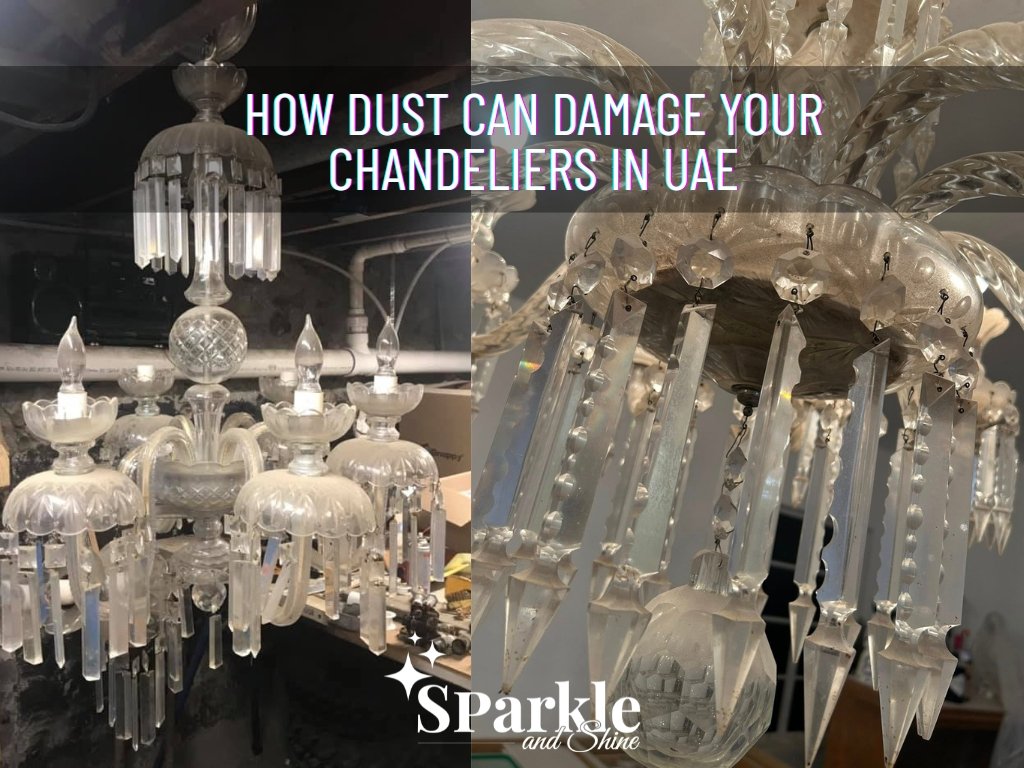
Summary:
- UAE dust is chemically aggressive and causes far more than a dull appearance—it damages crystals, metals, and electrical systems.
- Light output can drop by 60% when dust layers as thin as 0.5 mm block refraction.
- Left unchecked, “petro‑dust” bonds to crystal and causes permanent etching that no cleaning can reverse.
- Accumulated dust adds kilograms of weight, stressing mounts and wiring; combined with poor installation, it can lead to ceiling damage and fire risks.
- Professional Chandelier Cleaning every 6‑12 months is the only way to preserve both performance and value.
I have been restoring chandeliers across the UAE for 14 years. I have worked in royal majlis rooms, Palm Jumeirah villas, Emirates Hills foyers, five‑star hotel lobbies, and private penthouses overlooking the Gulf. I have taken apart Buhamian crystal masterpieces worth more than luxury sedans.
And I can tell you this with complete certainty: neglect is far more expensive than maintenance.
Most homeowners assume dust simply makes a chandelier look dull. That assumption is dangerously shallow. In the Gulf, dust is not cosmetic. It is structural, chemical, electrical, and financial damage slowly building above your head.
The Gulf Factor: Why UAE Dust Is Chemically Aggressive
If you grew up in Europe, you may think dust is just lint and pollen. In the UAE, dust is silicated sand suspended with industrial pollutants and saline humidity from the Arabian Gulf. That combination is destructive.
Silica particles are microscopic abrasives. When they settle on brass arms, gold‑leaf detailing, or chrome frames, they do not just sit there. With humidity, they form a damp, mildly alkaline layer. This hygroscopic dust traps moisture directly against the metal surface.
I frequently see:
- Micro‑pitting in chrome finishes
- Dull patches on gold leaf
- Accelerated tarnishing of brass
- Surface oxidation under decorative screws and caps
Once corrosion starts, it spreads under the plating. You no longer have a surface issue. You have structural metal degradation.
Here is the uncomfortable truth: by the time you notice visible discolourations from the floor, the corrosion has already been working for months. Whether you own a traditional crystal masterpiece or a sleek Contour Chandelier, the risk is the same, the dust does not discriminate.
When Crystal Loses Its Brilliance, Light Refraction Degradation
Crystal works because of physics. Bohemian and Egyptian crystals are precision‑cut to refract and disperse light. The brilliance you pay for is a direct function of refraction angles and surface clarity.
When I measure neglected crystals, I often find a dust layer between 0.5 mm and 4 mm thick. It looks innocent. It is not.
A 0.5 mm layer of fine particulate acts like an opaque diffusion film. It interferes with the refractive index and surface reflection properties, reducing effective light dispersion by up to 60 %. The crystal is no longer bending light—it is scattering it randomly. That means your AED 200,000 chandelier is now performing like cheap acrylic.
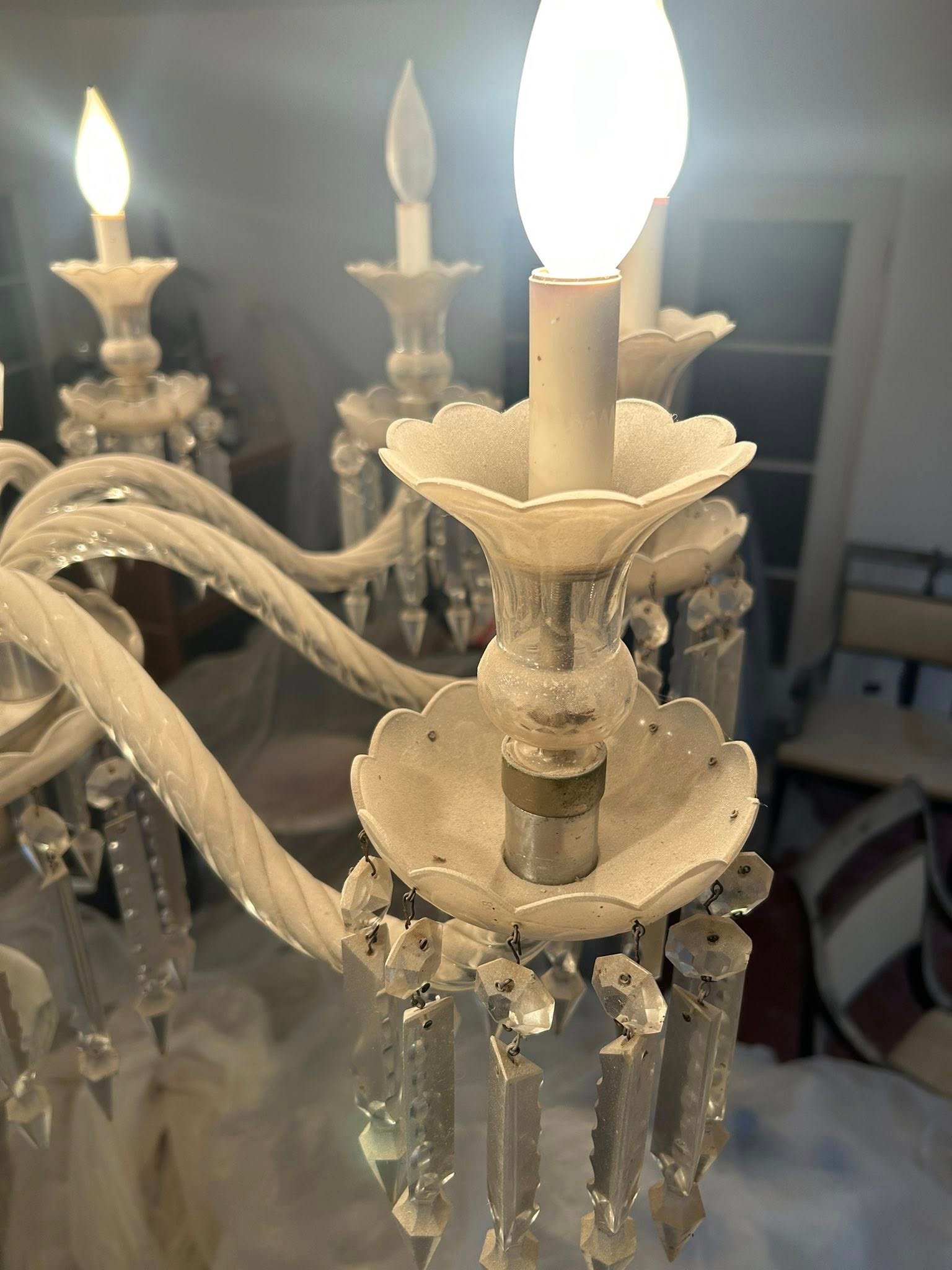
I recently inspected a Custom Chandelier in a Palm Jumeirah villa where the client thought the “warm glow” was the LED driver, not realising it was 4 mm of solidified dust blocking the light. Once we dismantled and decontaminated it, the light output nearly doubled. The designer was shocked. The homeowner was embarrassed.
Light loss is not subtle. It is physics.
In my 14 years at Sparkle and Shine UAE, I have performed over 2,000 autopsies on dusty chandeliers. Most damage was preventable with regular professional Chandelier Cleaning.
Sick Crystal Syndrome (Permanent Etching from Petro‑Dust)
This is what many designers do not understand.
The UAE air contains oil‑based particulates from traffic emissions, construction activity, and HVAC systems. What comes through your AC vents is not clean Alpine air it contains fine petro‑dust.
Over time, these hydrocarbon particles bond with dust and form a thin sticky film on crystal. It looks like haze. It feels slightly greasy when I wipe it with a gloved finger.
If left for 6 to 12 months, especially in high‑humidity months, that film begins to chemically react with the glass surface. The bonding agents and acidic components start micro‑etching. We call it Sick Crystal Syndrome.
Once etched, no cleaning solution can restore the original polish. I have polished and restored hundreds of fixtures, and even then, I cannot fully reverse advanced etching. Replacement becomes the only option. At that point, you are no longer paying for cleaning, you are sourcing discontinued crystal batches from Europe at premium cost.
That is not maintenance. That is regret.
Even non‑crystal fixtures suffer. Stone Chandeliers, for example, face their own battle: porous surfaces trap dust deeper, and the abrasive silica particles can wear down delicate carvings if not handled with specialist care.
Structural Strain and Installation Risks (The Hidden Weight)
People underestimate mass.
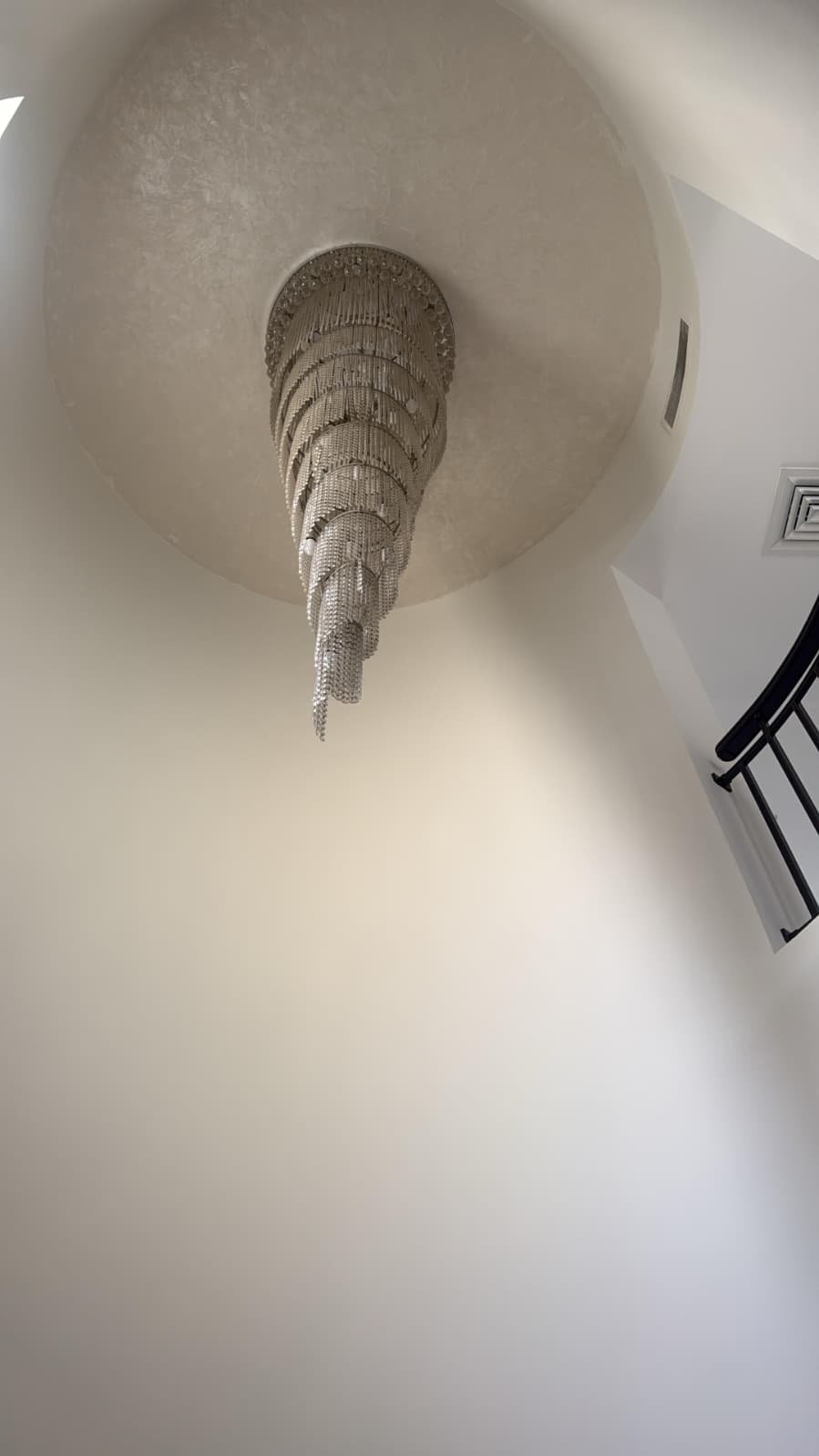
Dust is heavy. In a large double‑height villa chandelier, I have personally measured accumulated debris between 3 and 5 kilograms. That is equivalent to hanging a small child from your ceiling anchor.
Now add this to decorative extensions, chain drops, and sometimes questionable mounting brackets.
Dust weight combined with poor Chandelier Installation is a recipe for disaster. I have seen plasterboard ceilings crack under the silent weight of accumulated grime. By the time homeowners notice misalignment, structural stress is already advanced micro‑fractures, slight tilting, tension on wiring, and subtle creaking in AC airflow.
Hire us for professional Chandelier Installation
This is not about aesthetics. This is about physics and gravity. A professionally installed fixture distributes weight correctly; a neglected one compounds risk with every passing month.
Electrical Micro‑Arcing and Fire Risk
Fine conductive dust settles into candle covers, LED drivers, and socket assemblies. In high‑end hotels in Abu Dhabi and Sharjah, I have opened fittings where particulate had built up inside terminal connections.
That dust can:
- Trap heat
- Disrupt insulation
- Cause intermittent short circuits
- Trigger LED flickering
- Create micro‑arcing inside sockets
Micro‑arcing is not dramatic at first. It is a tiny electrical jump caused by resistance or contamination. Over time, it damages internal components and increases fire risk.
If your chandelier flickers and you keep changing bulbs, you are treating the symptom, not the cause. The root is often conductive dust and it will keep coming back without deep, professional cleaning.
The Emotional Cost of Neglect
Let me say this respectfully.
When I walk into a luxury villa and see a neglected chandelier, I do not see dust. I see a deteriorating investment suspended above imported Italian marble and custom millwork.
A chandelier is not a decorative afterthought. It is the visual anchor of your space. It reflects your standard. It amplifies the work of your architect and interior designer. Allowing it to degrade silently is like parking a Rolls‑Royce outside and never servicing the engine.
High‑net‑worth assets require disciplined maintenance. In the Gulf environment, that discipline must be more aggressive than in Europe or North America.
How to Protect Your Investment (Professional Recommendations)
Based on 14 years of field observation across the UAE, I advise my private clients to follow this protocol:
- Deep professional cleaning every 6 to 12 months, more frequently for coastal or high‑rise properties. Book a Chandelier Cleaning session before the visible haze sets in.
- Annual electrical inspection to check for dust ingress, flickering, and micro‑arcing.
- Frame corrosion checks, especially in humid zones; pay attention to brass and gold‑leaf finishes.
- Immediate attention if light output appears warmer or dimmer than when the fixture was new.
For owners of Stone Chandeliers, always request non‑abrasive cleaning methods to preserve the surface.
Conclusion
Chandeliers do not fail suddenly. They deteriorate gradually.
The difference between brilliance and decay is usually six months of neglect. I have restored masterpieces that owners thought were ageing naturally. They were not ageing. They were suffocating.
If you invested in crystal, let it perform like crystal.
If you installed a statement piece, let it make a statement.
And if your ceiling holds AED 200,000 of engineering and craftsmanship, do not treat it like a dust shelf.
From 14 years on scaffolding under luxury ceilings, I can tell you this with absolute confidence: your chandelier is either compounding value or compounding damage. The dust is not harmless. In the Gulf, it is active, chemical, heavy, and relentless. And gravity never negotiates.